

A surprising number of people still believe that walking away quietly from a hiring process is harmless. In reality, modern recruiting moves faster, records more interactions, and relies heavily on professional memory. Recruiters often remember candidates who communicate clearly because hiring is not just about filling one vacancy; it is about building long-term talent pipelines. In 2025, a survey by The Stepstone Group found that 64% of job seekers reported being ghosted by companies, while employers also reported frequent candidate silence during hiring, proving that communication gaps are now one of the biggest frustrations on both sides of recruitment.
That means when you decide you no longer want a role, sending a brief and respectful note instantly separates you from the majority. Think of it like returning borrowed keys instead of disappearing with them. Even if you never plan to work there, industries are smaller than they look. A hiring manager at one company may move to another company next year and remember how you handled yourself. A simple professional message can preserve trust, reputation, and future access.
There is also a practical advantage: many recruiters keep promising candidates in talent databases for future openings. If you politely withdraw today, you may still receive an invitation months later for a better role. Silence closes doors quietly; professionalism leaves them unlocked.
The Hidden Cost of Silence in Modern Hiring
Candidate ghosting has become common enough that many employers now expect it, but that does not make it wise. According to LiveCareer, one in four job seekers admitted ghosting an employer, most often because they accepted another offer or disliked the hiring experience.
What happens when you vanish? First, recruiters may continue scheduling internal interviews, reserving executive time, and delaying decisions because they assume you are still interested. That wasted time creates frustration quickly. Second, if the same recruiter later sees your application elsewhere, your previous silence can shape how seriously they consider you.
Professional withdrawal does not need a dramatic explanation. It only needs honesty and timing. Even two lines can work if written correctly. A respectful decline shows maturity, and maturity often matters more than the reason you withdrew.
Imagine two candidates: one disappears, another writes a short message thanking the company and stepping away respectfully. Which one feels safer to contact later? The answer is obvious.
The Best Time To Tell a Job You Are No Longer Interested
Timing changes the tone of your message. If you know early, tell them early. Delaying because the conversation feels awkward usually creates a bigger problem later.
Before an interview, the process is easiest. A short email gives the employer time to reassign the slot. After one interview, appreciation becomes more important because the company already invested time. After multiple rounds, your wording should acknowledge the effort they made.
A practical rule works well: once your decision is final, communicate within 24 hours. Waiting several days rarely improves anything. Indeed recommends declining interviews promptly because timing directly affects scheduling and candidate experience.
There is also a psychological reason to act quickly: hesitation often leads people to over-explain. You do not need a long defense. Recruiters do not need your life story; they need clarity.
If you accepted another offer, say so simply. If the role no longer fits your goals, say that respectfully. If the hiring timeline became too slow, you can still remain polite without sounding critical.
How To Tell a Job You Are No Longer Interested Professionally
The strongest professional message follows three simple parts:
- Appreciation
- Clear withdrawal
- Respectful closing
That structure works because it sounds balanced rather than abrupt.
Here is the formula:
Thank you for your time and consideration. After careful thought, I have decided to withdraw from the process because I am pursuing another direction. I truly appreciate the opportunity and hope our paths cross again.
Notice what is missing: apology overload, unnecessary excuses, emotional detail, criticism, and long explanations.
Professional language should sound calm. Avoid phrases like:
- I changed my mind.
- This job isn’t for me.
- I found something better.

Those phrases create friction. Instead, choose neutral language such as:
- I have decided to move in another direction.
- I am withdrawing my application at this time.
- I am pursuing another opportunity aligned with my goals.

Words matter because tone survives even in short emails.
How To Tell a Job You Are No Longer Interested by Email
Email remains the safest option because it creates a written record and gives recruiters space to process the message professionally.
Best Subject Lines
| Situation | Subject Line |
|---|---|
| Before interview | Withdrawal of Application – [Your Name] |
| After interview | Thank You and Application Withdrawal |
| After offer stage | Update Regarding My Application |
A short email example:
Subject: Withdrawal of Application – Sarah Ahmed
Dear Hiring Manager,
Thank you for the opportunity to interview for the role. After careful consideration, I have decided to withdraw my application as I am moving forward in another direction professionally. I sincerely appreciate your time and the conversations throughout the process.
Wishing your team continued success.
Best regards,
Sarah Ahmed
This works because it is direct and respectful. No extra paragraphs are needed.
How To Tell a Job You Are No Longer Interested After Interview
After interviews, companies have already invested energy, so your message should acknowledge that clearly.
A respectful version after interview sounds stronger when you reference appreciation:
- Thank you for meeting with me and sharing more about the role. After reflecting on my current career priorities, I have decided not to continue in the process. I truly appreciate your time and insight.
If you accepted another offer, honesty helps:
I wanted to let you know that I have accepted another opportunity and therefore need to withdraw from further consideration. I genuinely appreciate the chance to learn about your team.
This avoids unnecessary detail while staying transparent.
Current hiring research shows many candidates leave processes because they receive another offer or because timelines move slowly; 38% of applicants cited changing interest or another offer as their main reason for withdrawal in recent hiring surveys.
That means recruiters hear this often. Respectful clarity matters more than originality.
Respectful Ways To Decline Without Burning Bridges
Burning bridges usually happens through tone, not decision.
You can decline and still leave warmth in the conversation by saying:
I would welcome staying connected for future opportunities.
That sentence is powerful because it turns a rejection into relationship preservation.
Think of hiring like airport traffic: planes constantly change gates, but good communication prevents collisions. Careers work similarly. Today’s “no” may become next year’s “yes.”
Avoid criticizing salary, management, interview style, or company culture in withdrawal emails unless absolutely necessary. If serious misconduct occurred, that is different. But ordinary preference differences do not need explanation.
Even if the company disappointed you, professionalism protects you more than blunt honesty does.
Short Message To Say You Are No Longer Interested in a Job
Sometimes short works best.
Email Version
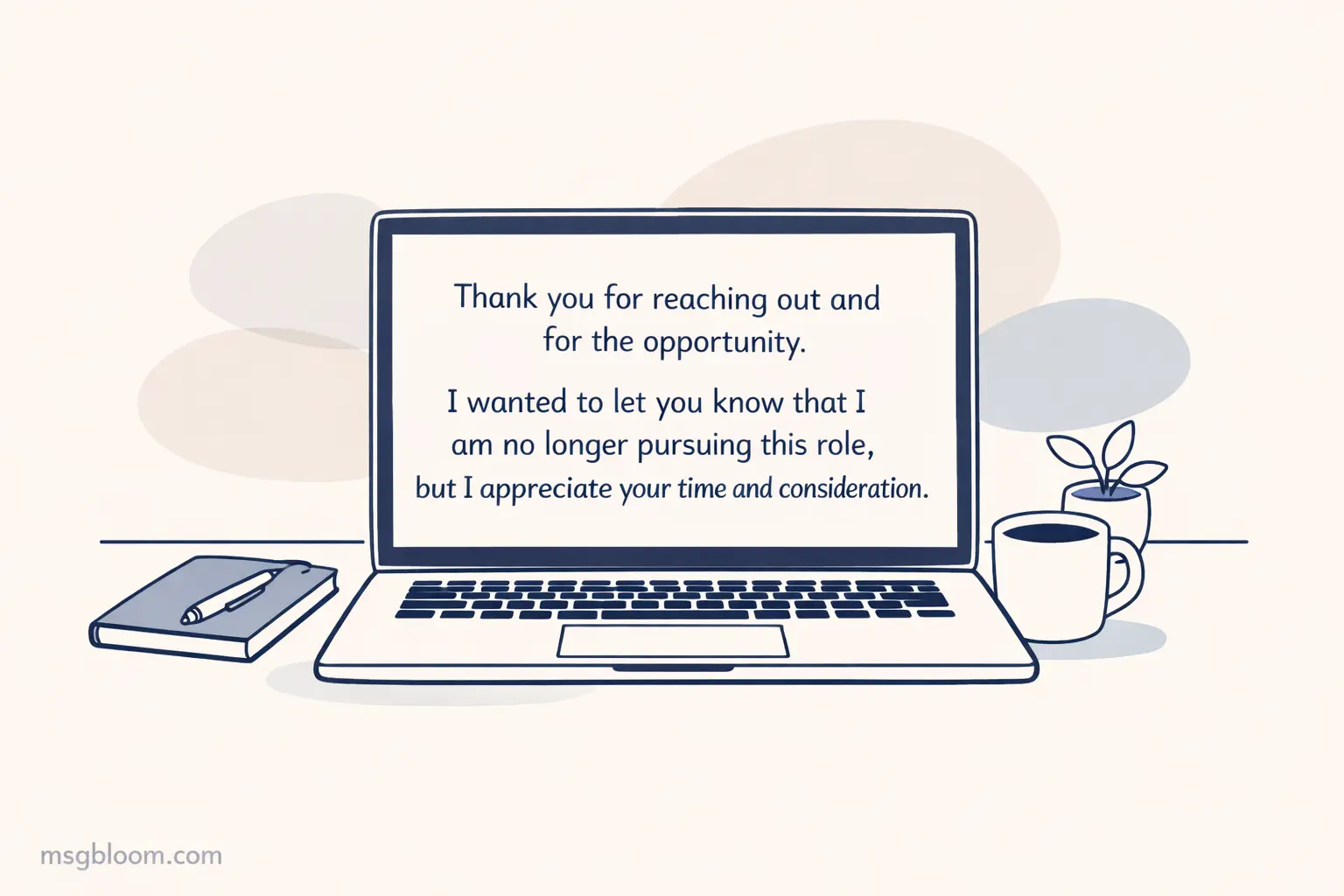
- Thank you for reaching out and for the opportunity. I wanted to let you know that I am no longer pursuing this role, but I appreciate your time and consideration.
LinkedIn Version
- Thank you for thinking of me. I have decided not to move forward with this opportunity, but I appreciate the connection and wish you success in filling the role.
Short messages succeed because they remove friction. Recruiters understand them instantly.
Professional Way To Decline a Job Opportunity
Declining a formal offer requires slightly more care because the company may already have internal approvals in place.
A professional response should include gratitude first:
- Thank you very much for the offer and for the confidence in my background. After careful thought, I have decided not to accept the position at this time. I sincerely appreciate the opportunity and the time invested by your team.
This protects your reputation far more than delay.
A delayed rejection often creates more damage than a prompt decline because internal approvals, payroll steps, and planning may already begin.
Related Posts: How To Tell Someone They Talk Too Much
FAQs
1. Should I explain why I am no longer interested in a job?
No long explanation is required. A short professional reason is enough.
2. Is email better than phone for declining a job?
Yes, email is usually safer because it is documented and less awkward.
3. Can I withdraw after multiple interviews?
Yes, and it is better to communicate early rather than disappear.
4. Is it rude to decline after accepting another offer?
No, recruiters understand this happens often if communicated respectfully.
5. Can declining now hurt future opportunities?
Only if done poorly. A respectful message often protects future chances.

Ryan Mitchell is a 26-year-old American content creator based in Seattle, Washington, with a fresh and creative approach to modern blogging. Passionate about storytelling and digital trends, Ryan has developed expertise in writing engaging and relatable content that resonates with younger audiences. Through his work on msgbloom.com, he combines authenticity with strategic content structure, helping deliver valuable and trustworthy information while maintaining a strong connection with readers across diverse topics.